
A Complete Guide to Django Training in Kerala
A Whole Guide to Django Course (Python) : Learn skills that are in demand and become equipped for work in Kerala.

What you'll learn
Django, a high-level Python web framework, empowers you to build complex and dynamic web applications efficiently. Our comprehensive Django course equips you with the skills to become a proficient Django developer, taking your Python programming expertise to the next level.
Whats Material Includes?
- Introduction to Django
- Building Your First Django Project
- Working with Models in Django
- Views and URL Routing in Django
- Django Templates
- User Authentication and Authorization
- Live Practical on Practice Domain
- Building APIs with Django REST Framework
- Deployment Strategies
- Django Forms

Complete a Django Course (Python) with Samantus
- Live Project
- 95% Practical
- 100% Placement help
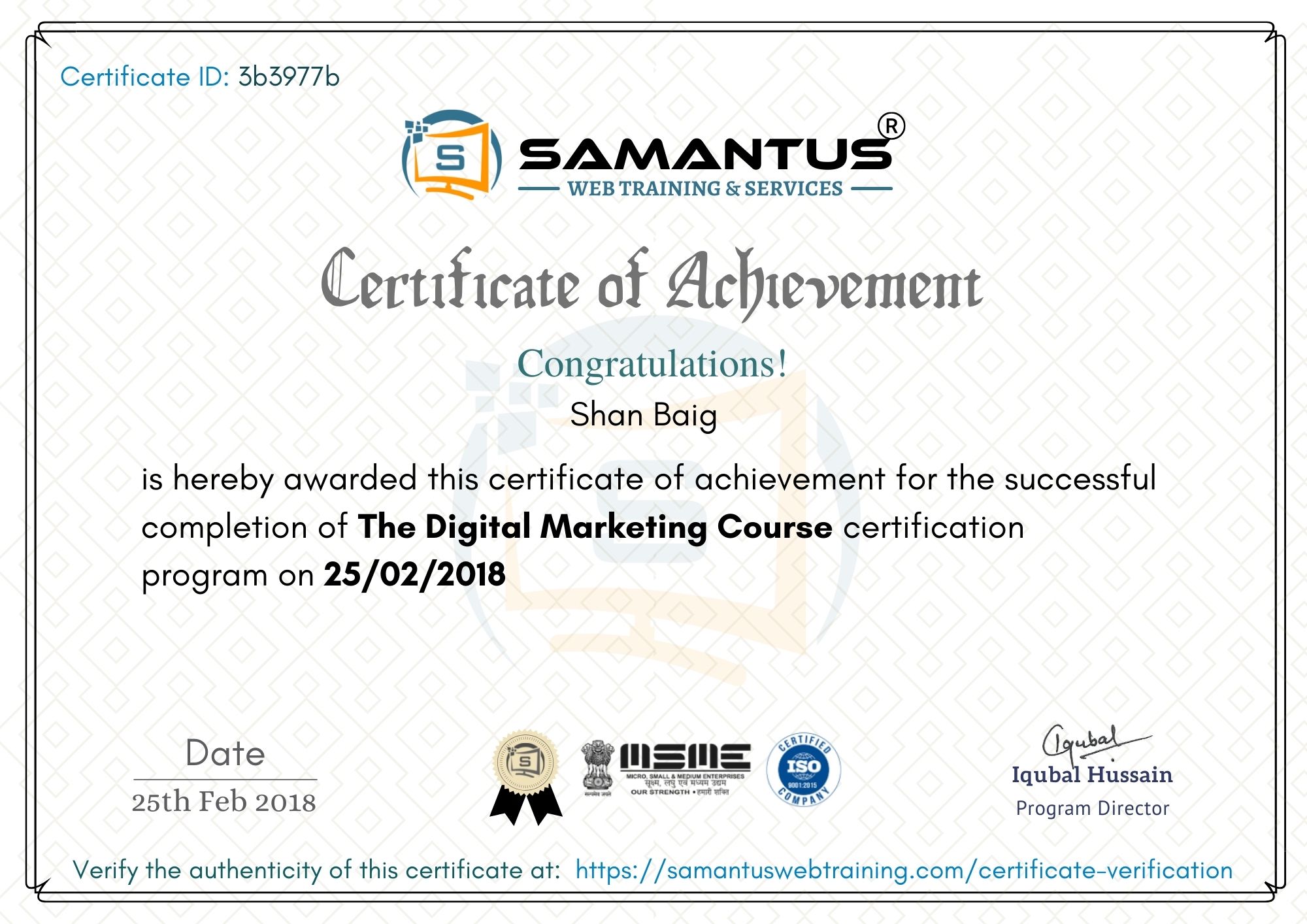
Get a Certificate in Django Training in Kerala
Unlock Your Potential: Get Your Django Course (Python) Certificate Today

Award winning

Make your Career
Course Curriculum:
Our Django Course is meticulously crafted to equip you with the essential skills to become a proficient Django developer. Here’s a glimpse into the exciting world of Django web development that awaits you:
Module 1: Introduction to Django
Module 1: Getting Started with Django
- Introduction to the Django Framework and its Features
- Installing Django using pip
- Creating a new Django project using Django-admin
- Understanding the project structure: settings, URLs, and manage.py
Module 2: Models and Databases
- Introduction to Django Models: Defining Database Models Using Python Classes
- Working with Django ORM (Object-Relational Mapping): querying and manipulating database data
- Migrations: managing database schema changes and version control
Module 3: Views and URL Routing
- Creating views for handling HTTP requests and generating responses
- Using URL patterns, map URLs to views.
- Passing data from views to templates, and vice versa.
Module 4: Templates and Static Files
- Introduction to Django Templates: Creating HTML Templates for Rendering Dynamic Content
- Template inheritance and template tags can be used.
- Managing static files (CSS, JavaScript, and images) in Django projects
Module 5: Forms and Form Handling
- Creating HTML forms using Django forms
- Processing form submissions and validating user input
- Customizing form behavior and rendering
Module 6: Admin Interface
- Exploring Django’s built-in admin interface for managing application data
- Customizing the admin interface: registering models, defining list displays, and adding filters
Module 7: Authentication and Authorization
- Implementing user authentication and registration in Django applications
- Understanding Django’s authentication system: user models, authentication backends, and login/logout views
- Implementing role-based access control (RBAC) and permission management
Module 8: Django middleware and middleware components
- Understanding Django middleware: its purpose and functionality
- Creating custom middleware for cross-cutting concerns like authentication, logging, and error handling
Module 9: Django REST Framework
- Introduction to the Django REST Framework (DRF) for building RESTful APIs in Django
- Creating API endpoints for CRUD (Create, Read, Update, Delete) operations
- Serializers, view sets, and authentication in DRF
Module 10: Testing with Django
- Writing unit tests and integration tests for Django applications
- Using Django’s test framework and TestCase class
- Testing views, models, forms, and custom functionality
Module 11: Deployment and Production Considerations
- Preparing Django projects for deployment: settings configuration, static file handling, and database setup
- Deployment options for Django applications: traditional servers, Platform-as-a-Service (PaaS), and containers
- Monitoring, scaling, and maintaining Django applications in production
Module 12: Project-Based Learning
- Applying Django concepts and techniques to real-world projects
- Developing a Django web application from scratch, including project setup, database modeling, views, templates, forms, authentication, and deployment
By the end of this course, students will have a solid understanding of Django fundamentals and be equipped with the skills to build robust web applications using the Django framework.
Module 2: Building Your First Django Project
Module 3: Working with Models in Django
- Understand models, the backbone of your Django applications, for defining data structures and interacting with databases.
Module 4: Views and URL Routing in Django
- Learn how to create views, the logic controllers in Django applications, that handle user requests and generate responses. Explore URL routing, the mechanism for mapping URLs to specific views in your application.
Module 5: Django Templates
- Delve into Django templating for defining the presentation layer of your web applications. Learn how to use Django template tags and filters to dynamically generate HTML content.
Module 6: User Authentication and Authorization
- Xplore builds secure web applications with user authentication and authorization functionalities in Django.
Module 7: Django Forms
- Master creating user-friendly forms for data collection and validation within your Django applications.
Module 8: Building APIs with Django REST Framework
- Learn how to leverage Django REST Framework, a powerful Django extension, to build RESTful APIs for data exchange between your Django applications and other services. (May vary depending on the course content).
Module 9: Deployment Strategies
- Understand different strategies for deploying your Django applications to production environments. (May vary depending on the course content).
Companies That Hire
(Freshers & Experienced Required As Per Company Norms)